If you have spent any time dealing with official processes in Indonesia, opening a bank account, setting up a business, applying for a work permit, or even signing a lease, you have almost certainly encountered the term NPWP.
For most people, it registers as just another piece of bureaucratic paperwork to sort out. But ask anyone who has tried to operate in Indonesia’s formal economy without one, and the picture quickly becomes a lot clearer. The NPWP is not just a card you keep in a drawer. It is the foundation of your entire relationship with Indonesia’s tax system, and understanding it properly makes a genuine difference to how smoothly you operate here.
So, What Exactly is NPWP?
NPWP stands for Nomor Pokok Wajib Pajak, which translates directly as Taxpayer Identification Number. Under Article 1 of Law No. 28 of 2007 on General Provisions and Tax Procedures, it functions as your official legal identity for all tax-related obligations in Indonesia.
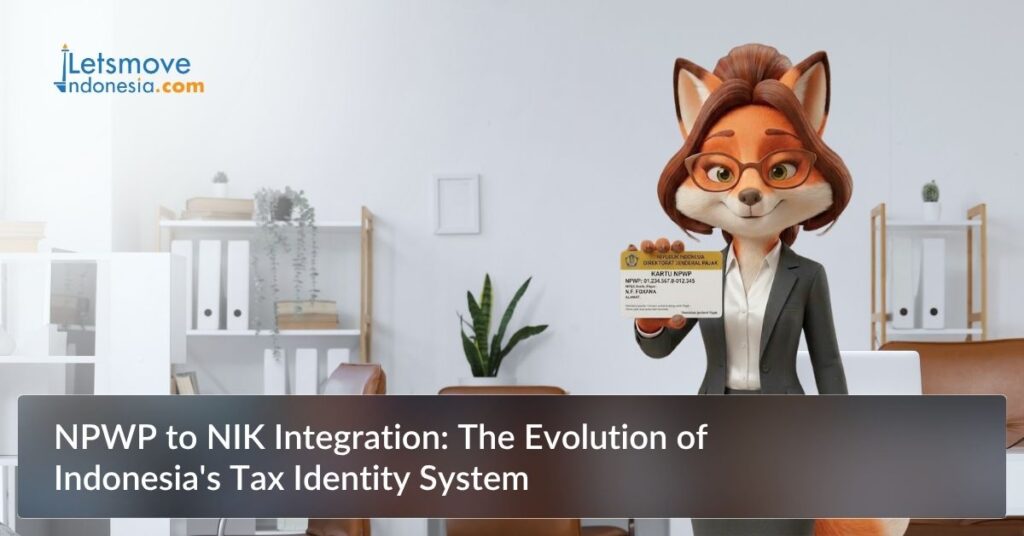
The physical card most people associate with NPWP is actually just a representation of something more fundamental: a 15-digit unique code that the Directorate General of Taxes (DJP) uses to identify, track, and manage taxpayer activity across the country. That code is structured as follows:
- The first 9 digits represent the taxpayer’s unique identity
- The next 3 digits indicate the registered tax office (KPP)
- The final 3 digits identify whether the taxpayer is a central entity or a branch
This structure is what allows the DJP to manage tax compliance nationally, and it reflects Indonesia’s ongoing shift towards a more integrated, data-driven tax administration system.
A Brief History: How NPWP Became What It Is Today
Before Indonesia’s tax reform of 1983, the NPWP system was decentralised and fragmented. Each regional tax office issued its own numbering system, which created a practical headache for anyone who moved between regions; you would need to obtain a new NPWP each time. It was inefficient, inconsistent, and difficult to oversee at a national level.
The introduction of Law No. 9 of 1983 changed all of that. NPWP issuance became nationally standardised, creating a single, consistent identification system that applied regardless of where a taxpayer was registered in Indonesia. Today, NPWP is centrally managed and forms a central pillar of Indonesia’s broader fiscal reform agenda, one that has only grown more sophisticated with each passing year.
Register Tax Identification Number with Lets Move Indonesia
NPWP is More Than Just a Requirement
Here is where many people, locals and foreigners alike, get the NPWP slightly wrong. NPWP has a significant role in securing a business license or satisfying an administrative requirement. That framing is not inaccurate, but it misses the bigger picture.
Holding an NPWP formally recognises you as a taxpayer in Indonesia’s system. That recognition comes with both rights and obligations:
- The right to receive fair, transparent, and accessible tax services from the government
- The obligation to calculate, pay, and report your taxes accurately and on time
- The responsibility to submit your annual tax return (SPT) within the required deadlines
It is a two-way relationship. The government uses tax revenue to fund public services and national development, and in return, registered taxpayers are entitled to operate within Indonesia’s formal economy with full legal standing.
Why It Matters for Businesses and Foreign Investors
For anyone running a business in Indonesia, NPWP is non-negotiable. It is not optional and it is not something you can deprioritise until later. Any entity engaging in commercial activities must be registered for NPWP to do any of the following:
- Obtain business licences and operational permits
- Process tax payments and submit regulatory reports
- Open and operate business bank accounts
- Engage in financial transactions with local and international partners
- Participate in government tenders or contracts
For foreign investors establishing a PT PMA, NPWP registration is a prerequisite for operational compliance. Without it, your business simply cannot function within Indonesia’s formal economy. Beyond compliance, NPWP also determines your applicable tax rates, your access to available incentives, and your eligibility for certain regulatory benefits — all of which have real financial implications for how your business operates.
Going Digital: The Electronic NPWP
Indonesia’s tax administration has been undergoing serious digital transformation, and NPWP registration is fully part of that shift. Taxpayers can now register online through the official platform at ereg.pajak.go.id, removing the need for in-person visits to the tax office. Once approved, the NPWP is issued electronically and can be stored and used digitally for all tax-related transactions.
This matters practically because it means faster processing, reduced administrative burden, and better data accuracy across the system. It also dispels the outdated assumption that you need a physical card to be a legitimate taxpayer. The digital identifier itself is sufficient, and in most processes today, it is actually preferred.
The NIK Integration: A Major Shift Since July 2024
One of the most significant recent developments in Indonesia’s tax landscape is the integration of NPWP with the NIK, the national identity number printed on the Indonesian ID card (KTP).
Since 1 July 2024, the government has been moving towards using NIK as the primary taxpayer identification number for individual taxpayers. The goals behind this integration are straightforward:
- Simplify taxpayer identification by reducing the number of separate numbers individuals need to manage
- Improve data synchronisation across government agencies, making information more consistent and accessible
- Enhance compliance monitoring, making it easier for the DJP to identify gaps or inconsistencies
For individual taxpayers, particularly Indonesian citizens and long-term foreign residents, this integration means fewer administrative steps and a more unified identity within the system. It also means that compliance is more visible and more easily enforced than it was before — a point worth taking seriously.
Common Misconceptions Worth Clearing Up
Despite how central NPWP is to operating in Indonesia, a few persistent misconceptions cause people to misunderstand or underestimate it.
The first is that NPWP is just a card. It is actually not, and the card is a physical representation of a numerical identity, and the number itself is what carries legal weight.
The second is that NPWP is only for specific transactions like loans or permits.
In reality, its primary function is ongoing tax compliance, and those other uses are secondary to that core purpose. The third, and perhaps most consequential, is that registering for NPWP is a one-time administrative task with no ongoing obligations. It is not. Registration triggers continuous responsibilities, including regular tax reporting and payment, that do not disappear simply because a business is quiet or a year is unprofitable.
These misunderstandings tend to lead to non-compliance, which carries administrative penalties and, in more serious cases, legal consequences. Getting clear on what NPWP actually means is the best way to avoid that outcome.
Let Lets Move Indonesia Handle It For You
Lets Move Indonesia believes that understanding your obligations should not cause much confusion, and managing them should not consume your time. And with Lets Move Indonesia by your side, it does not have to.
We have been helping foreign nationals, expatriates, and investors navigate Indonesia’s regulatory system, not just the technical requirements, but the practical realities of how it applies to different situations.