- Home
- Legal Services
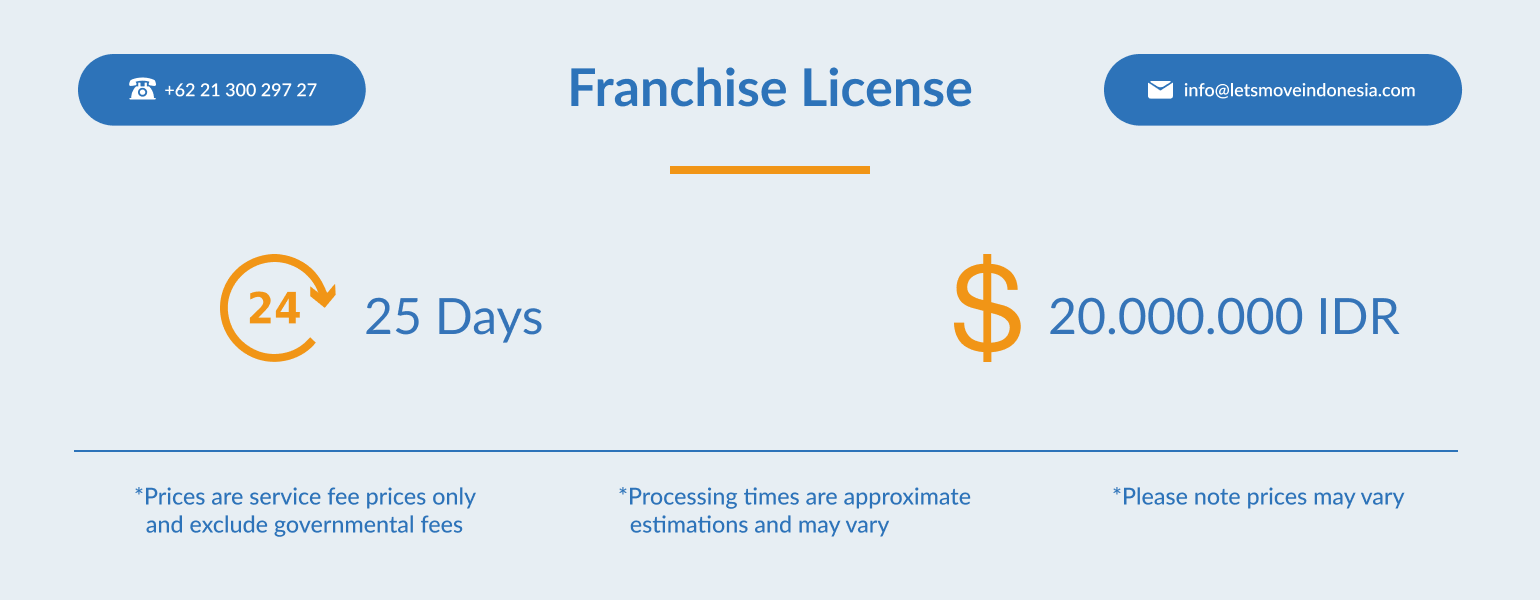
- Franchise License

Franchise License
Company Registration & Legal Services
- Share:
Franchise License Agreement – Who is it for and what are the benefits
An Indonesian franchise business model is one of the best business agreement to be done in Indonesia to start up your business because, through franchise relationship, business owners don’t have to worry about things related to the business strategy. The franchise is a business where franchisors will be responsible in terms of planning, the operating system and the business strategy of the franchise, so you only need to carry out the operational system and procedures that have been informed by you when agreeing to the franchise business cooperation.
As easy as it sounds, starting a franchising business in Indonesia will also require you to adhere to Indonesia laws, as mandated through Peraturan Menteri Perdagangan (Ministry of Trade) No. 31/M-DAG/PER/8/2008 regarding the Implementation of Franchising. Both Franchisors and Franchisees must obtain a Franchise License or STPUW in order to set up a franchise business in Indonesia.
STPUW (Surat Tanda Pendaftaran Waralaba) acts as legal evidence that Franchisee has officially registered their names under the franchise agreement.
As a market-leading business consultancy in Indonesia, Lets Move Indonesia helps your franchise business to acquire the STPUW license, ensuring an efficient process and zero hassle when opening a franchise in Indonesia.
Understanding the difference between Franchisee and Franchisor
Franchising involves a unique business relationship where a franchisor grants a license to a franchisee, allowing them to operate a business using the franchisor’s established brand, products, and systems.
Franchisor:
- The franchisor is the owner of the brand and the intellectual property associated with it.
- They develop the business model, including products or services, branding, and marketing strategies.
- They also provide training and ongoing support to franchisees.
- The franchisor has a certain degree of control over the franchisee’s business to ensure brand consistency and adherence to the established system.
- They typically receive an initial franchise fee and ongoing royalty payments from every franchisee.
Franchisee:
- The franchisee is an independent business owner who invests in the right to operate a franchise under the franchisor brand.
- They are responsible for the day-to-day operations of their franchise, including hiring staff, managing finances, and providing customer service.
- While the franchisee benefits from the franchisor established brand and support, they must adhere to the franchisor guidelines and standards.
- Every license agreement outlines the specific terms and conditions governing the relationship between the franchisor and franchisee.
In essence, the franchisor creates and maintains the franchise system, while the franchisee operates a specific unit within that system. The franchisor provides the blueprint for success, while the franchisee implements it at the local level.
Frequently Asked Questions
Can a foreign company be a franchisor in Indonesia?
Yes, but they have to register their company first as an Entity in Indonesia.
Do I have to make a PT to become a franchisee?
Yes, you need to make at least a PT to become a Franchisee.
What would happen if I run a franchise business but don’t have STPUW?
Your business license can be revoked and government can legally close your business.
Why do you need a legal advisor to register your Franchise License?
Navigating Indonesia’s franchise laws can be complex. Engaging a legal advisor is crucial to ensure your franchise agreement complies with Indonesian regulations, safeguarding both the franchisor and franchisee. They will:
- Clarify the Franchisor-Franchisee Relationship: Clearly define the rights and obligations of each party, including aspects like fees, intellectual property use, and termination clauses.
- Draft a Comprehensive Agreement: A well-drafted agreement addresses key areas like territory, training, support, and dispute resolution, preventing future conflicts.
- Prepare the Disclosure Document: This mandatory document outlines the franchise system’s details, helping potential franchisees make informed decisions.
- Advise on Business Control: Understand the level of control a franchisor can exercise over the franchisee’s operations while complying with Indonesian law.
- Ensure Compliance with Contract Law: Ensure the franchise agreement adheres to general contract law principles, making it legally enforceable.
What's the difference between a license for Company Registration and Trademark License?
- Company Registration License: This license allows you to establish a legal entity in Indonesia and conduct business activities. It is a general business license and does not grant you rights to a specific brand or intellectual property.
- Trademark License: This license, granted by the trademark owner (licensor), permits another business (licensee) to use their intellectual property, such as a trademark, logo, or brand name. It allows you to operate under an established brand while following specific guidelines.
What are the franchise fees?
- Initial Franchise Fee: This is a one-time payment made by the franchisee to the franchisor for the right to use the franchise system, brand, and operational support.
- Ongoing Fees: These are recurring payments, usually a percentage of gross sales or a fixed fee, paid by the franchisee to the franchisor for continued support, marketing, and use of the brand. The specific fee structure is outlined in the license or franchise agreement.
Should Franchisees provide property for franchise business?
In a franchise arrangement, the franchisee usually does not own the property where they operate. Instead, they have the “right to use” the franchisor’s brand and business model within a specified location. This allows franchisees to benefit from a proven business model and established brand recognition without the need for extensive property investment.
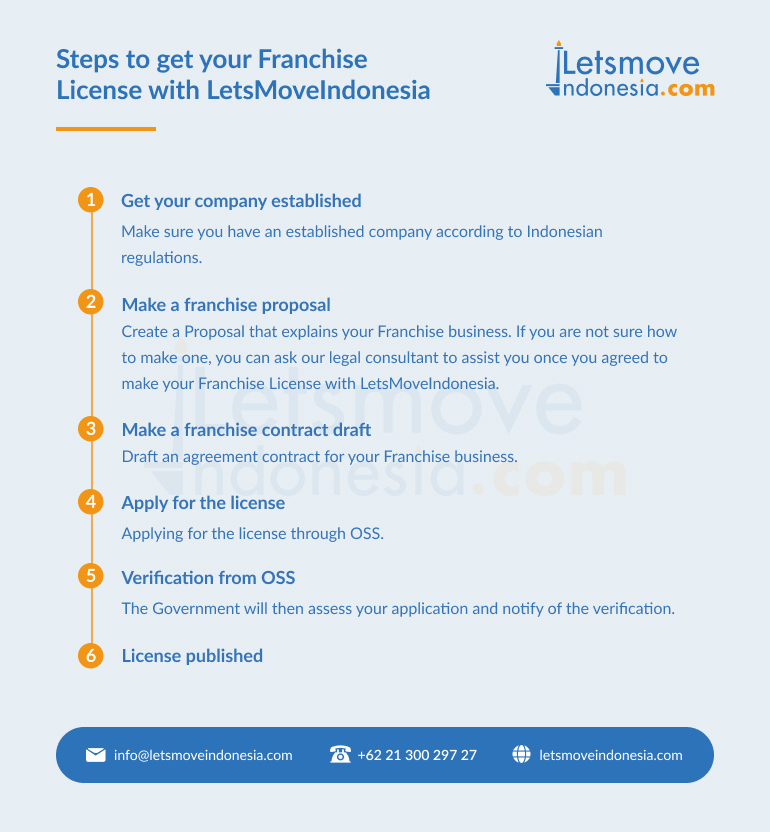
Steps to get your Export Licenses with Lets Move Indonesia
- Get your Company Established
- Make sure you have an established company according to Indonesian regulations.
- Make a Franchise Proposal
- Create a Proposal that explains your Franchise business. If you are not sure how to make one, you can ask our legal consultant to assist you once you agreed to make your Franchise License with Lets Move Indonesia.
- Make a Franchise Contract Draft
- Draft an agreement contract for your Franchise business.
- Apply for the License
- Applying for the license through OSS
- Verification from OSS
- The Government will then assess your application and notify of the verification.
- License Published
Pros and Cons of Franchising vs Setup Your Own Business
Features | Franchising | Setting Up Your Own Business |
|---|---|---|
Brand Recognition | Established brand and reputation, attracting customers more easily. | Building brand recognition and customer loyalty takes time and effort. |
Business Model | Proven business model, reducing the risk of failure | Flexibility to create and adapt your own unique business model. |
Support | Training, marketing, and operational support from the franchisor. | You are responsible for all aspects of business operations and support. |
Costs | Franchise fee, ongoing royalties, and marketing fees can be expensive. | Lower initial costs but may incur higher expenses for marketing and development. |
Control | Limited control over business operations and decision-making, following the franchisor’s rules. | Full control over all aspects of your business. |
Agreement | Franchise agreement may include restrictions on pricing, products, and territories. | No restrictions, but you are solely responsible for legal and regulatory compliance. |
Relationship | Business relationship is established with the franchisor, requiring adherence to their standards. | You are independent and not bound by any franchisor relationship. |
Disclosure | Franchise disclosure documents provide detailed information about the franchise. | You are responsible for researching and understanding all aspects of your business. |
Expansion | Potential for easier expansion with the franchisor’s support. | Expanding your business may be more challenging and require additional resources. |
Innovation | Limited ability to innovate or change the business model. | Freedom to innovate and adapt your business to market trends and customer needs. |
Exit Strategy | License to use the brand may have restrictions on selling or transferring the business. | Greater flexibility in selling or transferring your business. |
The specific terms and conditions of a franchise agreement will vary depending on the franchisor and the industry. It’s essential to thoroughly review the franchise disclosure documents and seek legal advice before entering into any licensing and franchising agreement.
Requirements
There are certain classifications for Franchisors and Franchisees that require different prerequisite documents to file in order to obtain a Franchise License:
New Application for STPW of Franchisor from Overseas
- Copy of Franchise Offering Prospectus
- Copy of business legality
New Application for Franchisee STPW originating from Overseas Franchises
- Copy of Technical Licence
- Copy of Franchise Offering Prospectus from Franchisor
- Copy of Franchise Agreement
- Copy of Company Registration Certificate (TDP)
- Copy of the Franchisor's STPW
- Copy of the Company's Deed of Establishment and/or Deed of Amendment that has been authorised by the Authorised Agency
- Copy of Proof of IPR Registration
- Copy of ID Card of the Company Owner/Responsible Person
New Application for STPW for Advanced Franchisor from Overseas
- Copy of Technical Licence
- Copy of Franchise Offering Prospectus
- Copy of Company Registration Certificate (TDP);
- Copy of STPW as Franchisee
- Copy of the Company's Deed of Establishment and/or Deed of Amendment that has been ratified by the Authorised Agency
- Copy of Proof of IPR Registration
- Copy of ID Card of the Company Owner/Responsible Person
New Application for STPW Franchisor originating from within the country
- Copy of Technical Licence
- Copy of Franchise Offering Prospectus
- Copy of Company Registration Certificate (TDP)
- Copy of Company Establishment Deed and/or Deed of Amendment that has been authorised by the Authorised Agency
- Copy of Proof of IPR Registration
- Copy of ID Card of the Company Owner/Responsible Person
New Application for STPW for Advanced Franchisor from Overseas
- Copy of Technical Licence
- Copy of Franchise Offering Prospectus
- Copy of STPW as Franchisee
- Copy of the Company's Deed of Establishment and/or Deed of Amendment that has been ratified by the Authorised Agency
- Copy of Proof of IPR Registration
- Copy of ID Card of the Company Owner/Responsible Person
New Application for STPW for Franchisee originating from Domestic Franchises
- Copy of Technical Licence
- Copy of Franchise Offering Prospectus from Franchisor
- Copy of Franchise Agreement
- Copy of Company Registration Certificate (TDP)
- Copy of the Franchisor's STPW
- Copy of the Company's Deed of Establishment and/or Deed of Amendment that has been authorised by the Authorised Agency
- Copy of Proof of IPR Registration
- Copy of ID Card of the Company Owner/Responsible Person
New Application for STPW for Advanced Franchisee derived from Overseas Franchises
- Copy of Technical Licence
- Copy of Franchise Offering Prospectus from Franchisor
- Copy of the Franchise Agreement
- Copy of Company Registration Certificate (TDP)
- Copy of the Franchisor's STPW
- Copy of the Company's Deed of Establishment and/or Deed of Amendment that has been authorised by the Authorised Agency
- Copy of Proof of IPR Registration
- Copy of ID Card of the Company Owner/Responsible Person
New Application for STPW for Continuing Franchisee derived from Domestic Franchises
- Copy of Technical Licence
- Copy of Franchise Offering Prospectus from Franchisor
- Copy of the Franchise Agreement
- Copy of Company Registration Certificate (TDP)
- Copy of the Franchisor's STPW
- Copy of the Company's Deed of Establishment and/or Deed of Amendment that has been authorised by the Authorised Agency
- Copy of Proof of IPR Registration
- Copy of ID Card of the Owner/Person in Charge of the Company
Application for STPW extension:
- Original Franchise Registration Certificate (STPW)
- Other documents if there are data changes from the documents submitted 5 years earlier. To learn more about the type of other licences you need to acquire, contact our legal advisors and get your FREE consultations
Other Popular Legal Licensing Services in Indonesia



- Share :





Contact Us
Speak to Our Team Now to Get Your Free Consultation!


More of Our Popular Indonesia Legal Services

Stay informed with the latest Indonesia Visa & Business updates.
Latest News
Get to Know Latest Business & Visa Updates
To celebrate 11 years of leading Indonesia’s visa, legal, and business consultation industry, Lets Move Indonesia is thrilled to announce the return of our highly anticipated Refer a Friend Scheme! After a well-deserved break, we are bringing back one of our community’s favorite initiatives to say thank you for your ongoing trust and support. Why […]
Lets Move Indonesia
10/22/2026
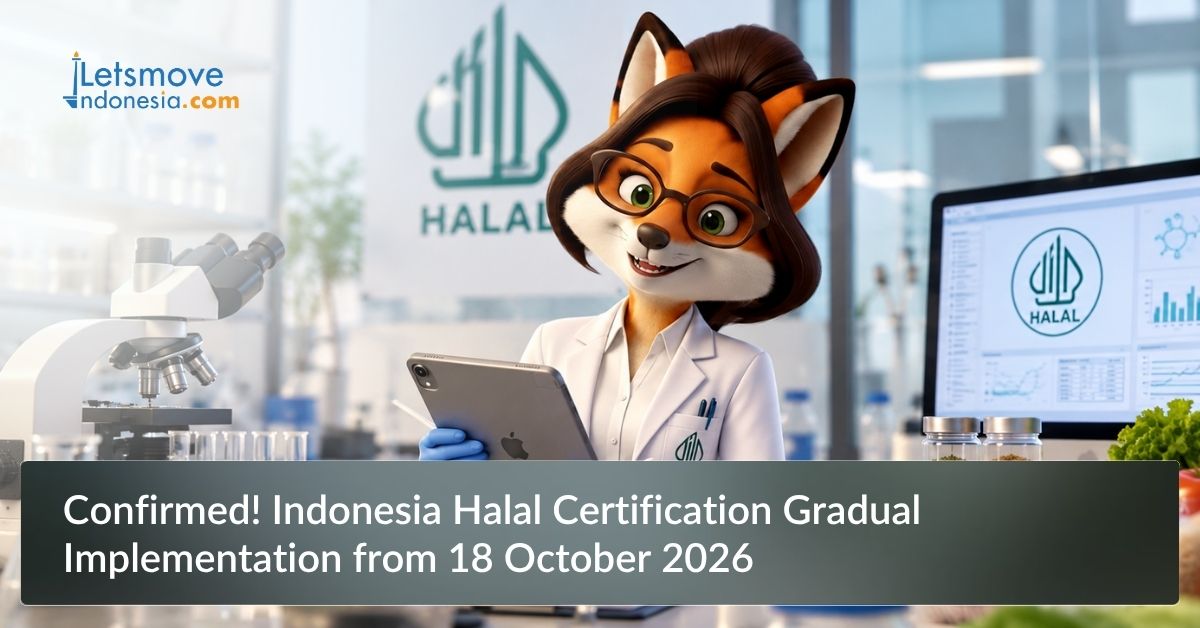
Indonesia has confirmed that the next phase of mandatory halal certification (sertifikasi halal) will proceed from 18 October 2026, with the government preparing specific arrangements for certain businesses and product categories. The Halal Product Assurance Organising Agency (BPJPH) confirmed on 9 October 2026 that the implementation date would not be postponed, while indicating that the […]
Lets Move Indonesia
10/19/2026
A virtual office in Indonesia offers businesses a flexible way to establish a professional business address without leasing a conventional office. For foreign investors and companies entering the Indonesian market, virtual office solutions can reduce overheads, provide administrative support and help establish a business presence, subject to applicable regulations. However, not every business activity is […]
Lets Move Indonesia
10/16/2026
Indonesia and Egypt have announced new bilateral agreements covering diplomatic cooperation, visa arrangements, statistics, and maritime affairs, alongside plans to expand trade and investment. The developments could strengthen economic ties between the two countries, although the implications for Immigration Indonesia and Indonesia Visa requirements will depend on how the agreements are implemented. Indonesian President Prabowo […]
Lets Move Indonesia
10/14/2026
For foreign investors looking to expand into Indonesia, acquiring an established business can offer a faster route into the market than building a new operation from the ground up. An acquisition can provide access to existing customers, local expertise, operational infrastructure and distribution networks, while helping an investor establish a stronger position in Southeast Asia. […]
Lets Move Indonesia
10/14/2026
After years of helping our clients settle in, build businesses and make Indonesia home, we wanted to do something in return. As a thank you to our loyal customers, every eligible service purchased from LMI Consultancy/Lets Move Indonesia comes with two complimentary tickets to selected Social Expat events in Jakarta and Bali, with a combined […]
Lets Move Indonesia
10/07/2026