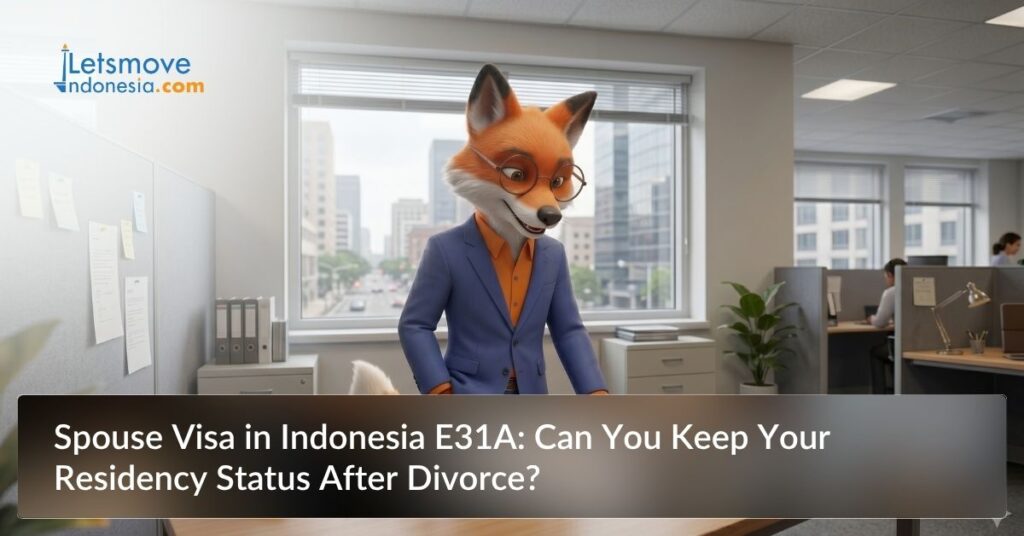
For many expatriates, obtaining a Spouse Visa Indonesia E31A is one of the most practical ways to build a life with their Indonesian partner. The visa allows foreign spouses to obtain an izin tinggal (stay permit) in Indonesia and can eventually lead to long-term residency through a KITAS or even permanent residency through a KITAP. However, a common concern arises when a marriage comes to an end: what happens to your residency status after divorce?
This guide provides a practical overview of the immigration implications of divorce for foreign spouses in Indonesia, including important visa application considerations, alternative residency options, and useful tips for maintaining compliance with Indonesian immigration regulations. Whether you have already obtained a spouse visa or are planning to apply, understanding the rules can help you avoid unexpected complications in the future.
Understanding the Spouse-Sponsored Visa in Indonesia
Indonesia offers several residency permits for foreign nationals who are legally married to Indonesian citizens. The Spouse Visa accommodates a foreigner married to an Indonesian citizen to stay in Indonesia for a period of one to two years.
Common Family-Based Stay Permits
| Visa Type | Purpose |
| Spouse KITAS (E31A) | Temporary stay permit sponsored by an Indonesian spouse |
| Spouse KITAP | Permanent residency permit available after meeting eligibility requirements |
| Dependent KITAS | Family-sponsored permit for spouses of KITAS or KITAP holders |
These permits allow foreign spouses to legally live in Indonesia while maintaining family unity. In certain circumstances, spouse KITAS holders may also apply for a work permit or undertake permitted business activities in accordance with Indonesian regulations.
Because these permits are directly tied to the marriage relationship, a divorce may affect the legal basis for the stay permit.
What Happens to a Spouse Visa After Divorce?
A spouse-sponsored stay permit is granted on the basis of a legally recognised marriage between a foreign national and an Indonesian citizen.
Once the marriage is legally dissolved, the sponsorship foundation supporting the permit may no longer exist.
The consequences depend on several factors, including:
- The type of permit held
- The length of the marriage
- Whether the foreign spouse holds a KITAS or KITAP
- Family circumstances
- Existing immigration history
For this reason, foreign nationals should review their immigration status carefully before finalising divorce proceedings.
If You Hold a Spouse KITAS (E31A)
Foreign nationals holding an E31A Spouse KITAS will generally lose their sponsorship basis once the divorce becomes legally effective.
In many cases, Indonesian Immigration may require the foreign spouse to:
- Convert to another visa category
- Obtain a new sponsor
- Transition to a work-sponsored KITAS
- Apply for an Investor KITAS
- Leave Indonesia if no alternative permit is available
One important tip is to begin exploring alternative visa options before the divorce process is completed. Early planning can help avoid gaps in legal residency.
Can You Keep Your Residency After Divorce?
The answer depends on your immigration history and permit status.
Current immigration regulations provide certain protections for foreign nationals who have established long-term residence in Indonesia, particularly those who already hold a permanent stay permit.
KITAP Holders May Have Additional Protection
Foreign spouses who have successfully obtained a KITAP may have stronger grounds to maintain residency after divorce.
Each case is assessed individually by Indonesian Immigration based on factors such as:
- Duration of the marriage
- Existing residency status
- Compliance history
- Family circumstances
- Presence of Indonesian children
Because residency rights after divorce can involve detailed legal interpretation, professional immigration advice is strongly recommended.
Alternative Visa Options After Divorce
Divorce does not necessarily mean you must leave Indonesia.
Several alternative pathways may allow you to continue living in the country legally.
Common Visa Conversion Options
| Visa Type | Suitable For |
| Working KITAS | Foreign employees working in Indonesia |
| Investor KITAS | PT PMA shareholders and investors |
| Business Visa | Frequent business visitors |
| Retirement KITAS | Eligible retirees aged 55 and above |
| Second Home Visa | Long-term residents with qualifying assets |
| Golden Visa | High-net-worth individuals and investors |
The most suitable option will depend on your employment status, financial situation, and long-term plans in Indonesia.
Child Custody and Family Considerations
For mixed-nationality families, immigration matters often extend beyond the foreign spouse.
Indonesian courts prioritise the best interests of the child when determining custody arrangements.
Key considerations include:
- Child’s age
- Educational continuity
- Emotional wellbeing
- Financial support
- Residency arrangements
Children born to mixed marriages may also enjoy specific citizenship rights under Indonesian nationality law. Where international relocation is involved, additional legal arrangements may be required to ensure parental rights are protected across jurisdictions.
Property and Financial Considerations
Divorce can also affect property ownership structures and financial arrangements.
Common issues include:
- Jointly owned assets
- Property ownership rights
- Prenuptial or postnuptial agreements
- Business interests
- Inheritance planning
Foreign nationals who own property, businesses, or investments in Indonesia should seek legal advice before finalising divorce proceedings to ensure their interests remain protected.
Practical Steps to Take Before Divorce
If you currently hold a spouse-sponsored permit, consider taking the following steps as early as possible:
- Review your visa validity period
- Understand your immigration obligations
- Explore alternative residency options
- Consult immigration and legal professionals
- Gather supporting documentation
- Notify relevant authorities when required
Taking proactive action can significantly reduce disruptions to your legal status.
Do You Need to Leave Indonesia Immediately After Divorce?
Not necessarily.
A common misconception is that divorce automatically cancels a foreign spouse’s right to remain in Indonesia. In reality, there are several legal pathways that may allow continued residence, provided the appropriate immigration procedures are followed.
The most important factor is ensuring that your stay permit remains valid and supported under Indonesian law.
Failing to address your immigration status after divorce could result in overstays, immigration violations, penalties, or complications when applying for future permits.
Manage Your Spouse Visa Status with Lets Move Indonesia
Navigating divorce is already a challenging experience. Managing immigration matters at the same time can make the process even more complex.
At Lets Move Indonesia, a subsidiary of LMI Consultancy, our immigration specialists assist foreign nationals with:
- Spouse Visa E31A applications
- Spouse KITAS and KITAP consultations
- Visa conversions after divorce
- Work permit and KITAS applications
- Family and dependent visa services
- Immigration compliance support
- Long-term residency planning
Whether you are currently going through divorce proceedings or simply want to understand your future residency options, obtaining professional guidance early can help protect your legal status and provide clarity for your next chapter in Indonesia.
Because when your family circumstances change, your immigration strategy should adapt as well.