The Indonesian government has introduced a significant tax incentive for 2026, providing relief to workers in labour-intensive sectors while reinforcing the importance of continued tax reporting and compliance. This policy forms part of a broader economic stimulus aimed at protecting purchasing power and maintaining economic stability throughout the year.
Government-Borne Income Tax Incentive for 2026
Starting in 2026, employees earning up to IDR 10 million per month in selected labour-intensive sectors will be exempt from Article 21 Income Tax (PPh 21). Under this scheme, the tax is borne by the government, meaning it is no longer deducted from eligible employees’ salaries.
This incentive is regulated under Minister of Finance Regulation (PMK) No. 105 of 2025, signed on 29 December 2025 and effective from 31 December 2025. The regulation applies to the entire 2026 fiscal year as part of Indonesia’s economic stimulus programme.
Eligible Sectors for the 2026 Tax Incentive
The incentive applies exclusively to employees working in the following five sectors: footwear manufacturing; textiles and garments; furniture manufacturing; leather and leather-based products; and tourism. Employees in these sectors will receive full income tax exemption on fixed and regular gross income throughout 2026, provided they meet the eligibility requirements.
Types of Income Covered by the Incentive
The government-borne PPh 21 applies to regular and fixed income, including monthly salary, fixed allowances, and other regular remuneration as stipulated in employment contracts or company policy. Both permanent and non-permanent employees are eligible, as long as their monthly income does not exceed IDR 10 million.
For non-permanent workers paid on a daily, weekly, unit-based, or piece-rate basis, eligibility applies where the average daily income does not exceed IDR 500,000.
What Is a Tax Incentive and Who Is Required to Pay Tax?
A tax incentive is a fiscal facility granted by the government to reduce or eliminate tax obligations for certain taxpayers under specific conditions. In this case, eligible employees do not bear the income tax themselves, as it is covered by the government.
However, employees who fall outside the eligible sectors or income thresholds remain subject to normal income tax obligations under Indonesian tax law.
Do Expatriates Have to Pay Income Tax in Indonesia?
Expatriates working in Indonesia are generally required to pay Indonesian income tax if they qualify as tax residents or earn income sourced from Indonesia. This applies regardless of whether they benefit from specific incentives.
Unless an expatriate is directly eligible under the incentive scheme and meets all conditions, tax obligations remain in force, including reporting requirements. Tax incentives do not remove the obligation to register, report, or comply with Indonesian tax regulations.
Tax Reporting Remains Mandatory in 2026
Despite the introduction of tax incentives, tax reporting remains mandatory for both employers and employees. Companies are required to pay the government-borne PPh 21 in cash together with salary payments and report the utilisation of the incentive through the Monthly PPh 21/26 Tax Return (SPT Masa) for each tax period from January to December 2026.
Employees must also ensure that they hold a valid Tax Identification Number (NPWP) or a National ID Number (NIK) integrated with the Directorate General of Taxes’ system.
Tax Reporting in 2026 with Lets Move Indonesia
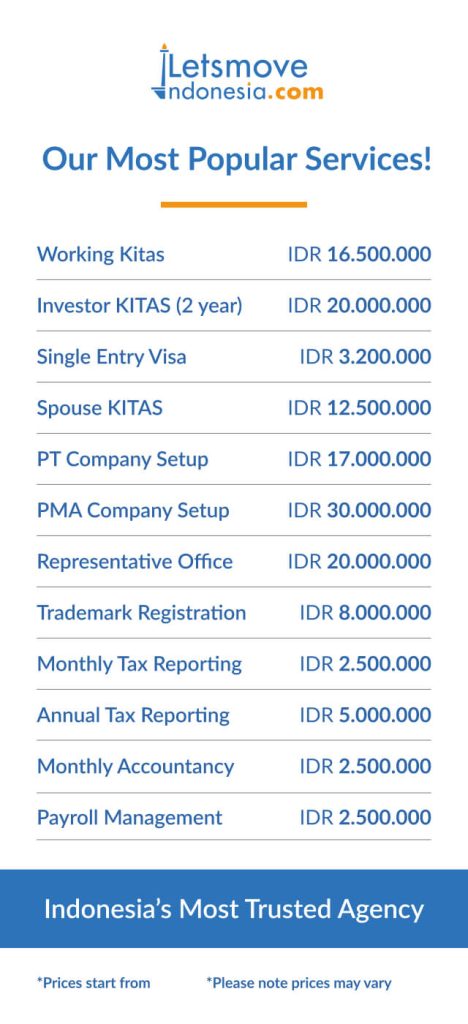
Navigating tax updates and compliance obligations can be complex, especially for expatriates and foreign-owned companies. Lets Move Indonesia provides professional support for tax reporting and compliance in 2026, ensuring that individuals and businesses meet all statutory requirements accurately and on time.
We offer an Individual Tax Reporting and Company Essential Tax Compliance Bundle Package, available until 30 March 2026, covering annual personal and corporate tax reporting, monthly tax compliance support, regulatory updates, and alignment with the latest Directorate General of Taxes requirements.
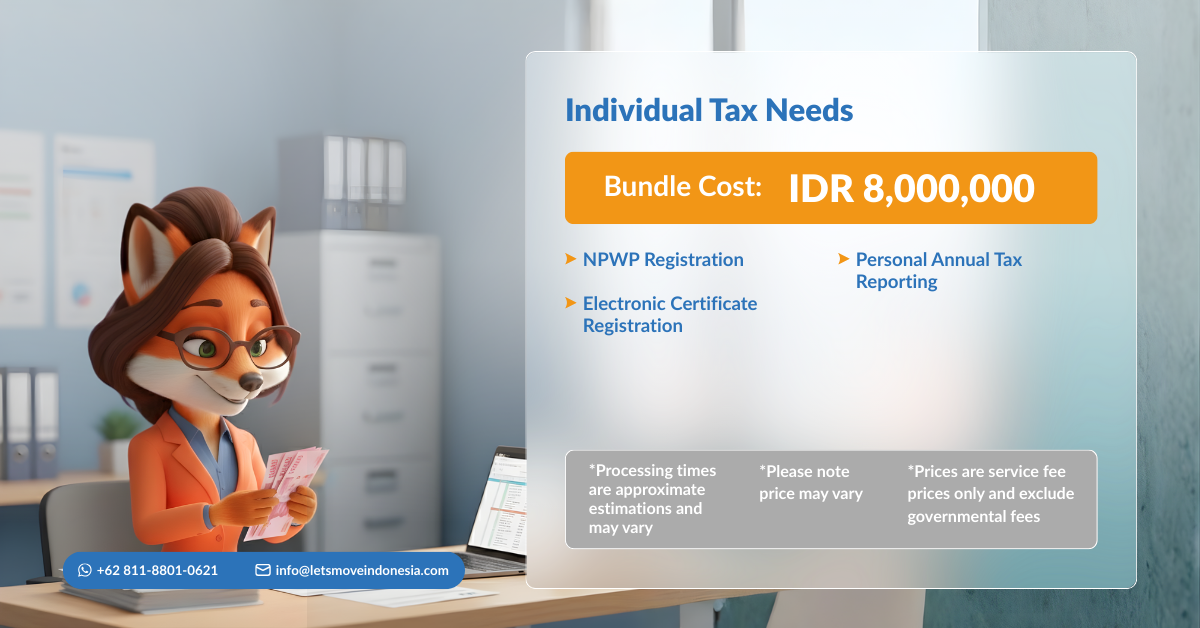
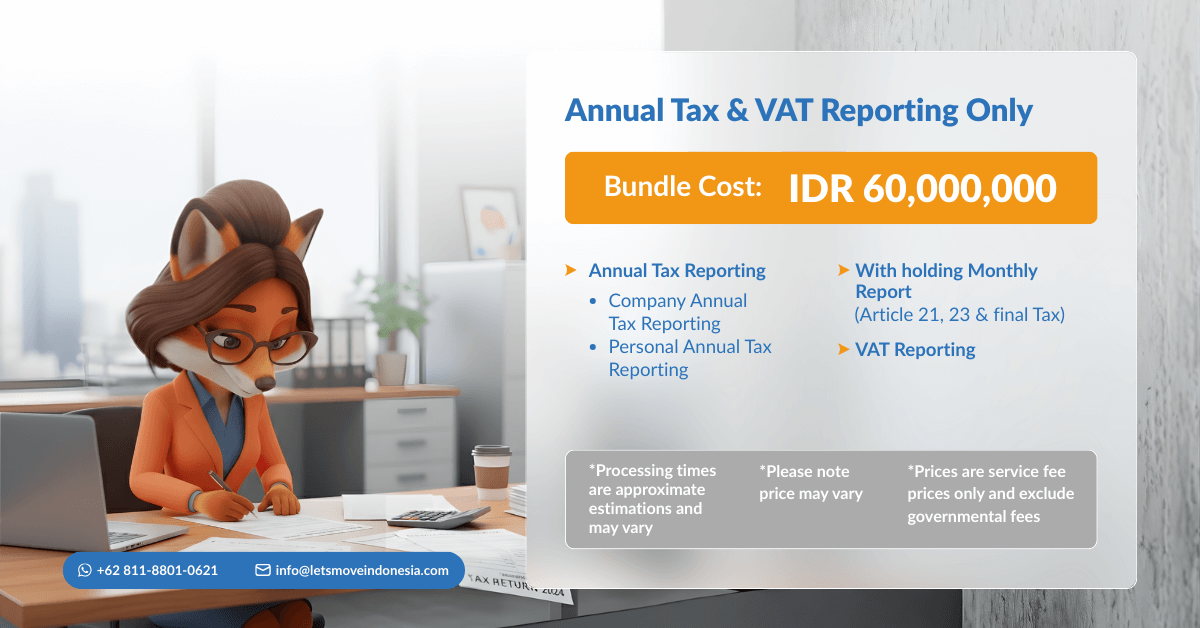
File Your Taxes and Stay Compliant in Indonesia with Lets Move Indonesia
Whether you are an expatriate employee, an employer, or a foreign-owned company, staying compliant with Indonesian tax law is essential. Tax incentives may reduce the tax burden, but they do not remove legal responsibilities.
With Lets Move Indonesia, you can file your taxes confidently and remain fully compliant with Indonesian law, supported by experienced professionals who understand both local regulations and expatriate needs.
As a subsidiary of LMI Consultancy, Lets Move Indonesia has been one of the most trusted names in tax compliance and corporate services in Indonesia. Adapting the expertise in Business Legal, Entry and Tax Compliance, we assist individuals and companies in meeting their tax obligations accurately and on time.