Remote Visa (KITAS) – Who is it for and what are the benefits
As of 2024, Indonesia has introduced several more visa programmes to cater to convenient travel to Indonesia without the hassle of constant exits and re-entries or frequent immigration visits. One of them was the KITAS E33G or Remote Visa, the new entry permit aimed to aid digital nomads to embark on a journey to Indonesia.
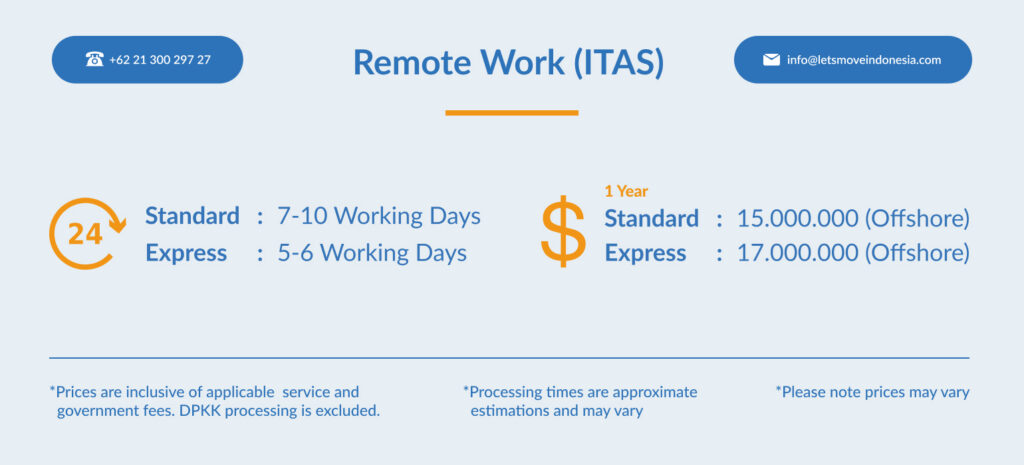
KITAS E33G, also known as the Remote Worker VISA, a 1-year temporary residence permit that provides an opportunity to reside in Indonesia while working virtually for a company located outside the country. Designed to cater to experienced slow-living digital nomads in search of their next destination or individuals seeking to extend their stay in Bali without interrupting their employment, this visa offers an ideal solution.
Benefits of Remote Visa to Indonesia 2025
Recognising the changing nature of work and the potential benefits of attracting remote workers, Indonesia has taken a progressive step forward by launching its remote worker visa program. The Remote Worker Visa (E33G) offers a streamlined application process for those looking to make Indonesia their temporary home base. This initiative aims to make it easier for digital nomads and remote employees to live and work in Indonesia.
Simplified Application Process: The Remote Worker Visa (E33G) provides a simplified application process, making it easier for remote workers to obtain a visa to live and work in Indonesia.
Extended Visa Duration: The visa is valid for up to 12 months, allowing remote workers to stay and work in Indonesia for an extended period without the need for frequent visa renewals.
Remote Work Flexibility: Remote workers can work from anywhere in Indonesia, providing flexibility and freedom to choose their preferred work location.
Tax Benefits: Remote workers may be eligible for tax benefits and incentives provided by the Indonesian government to attract foreign professionals.
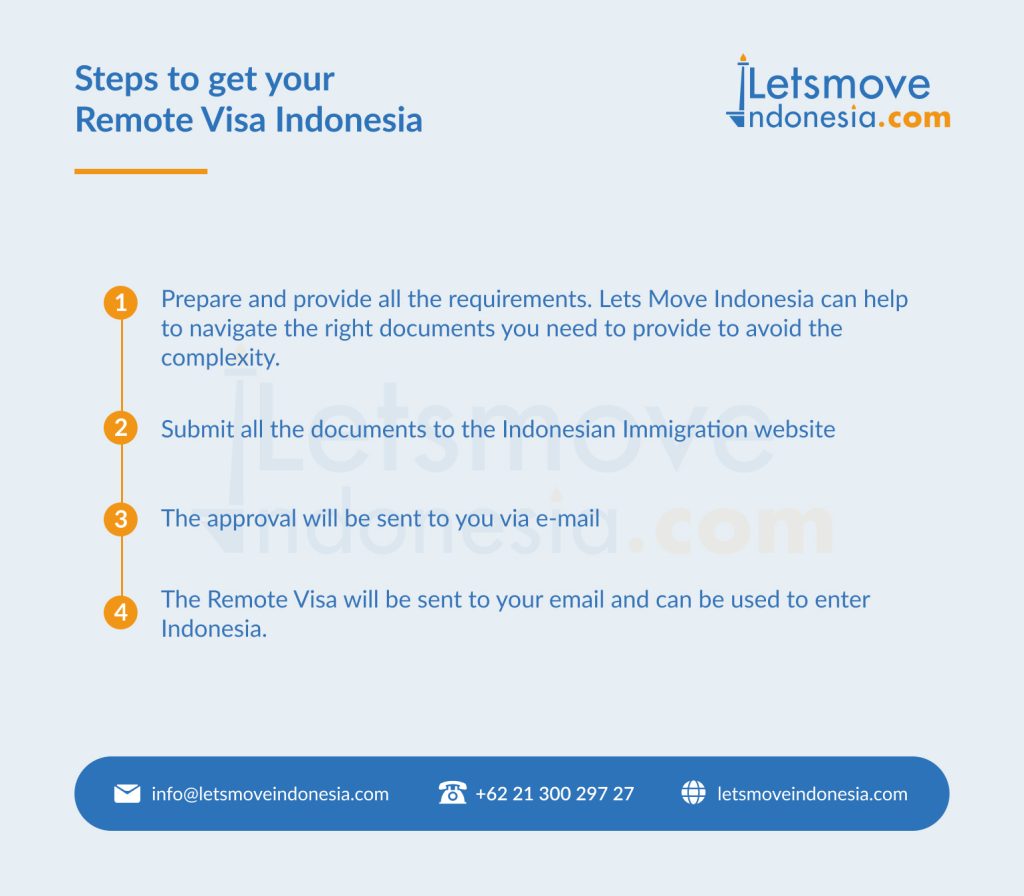
Steps to get your Remote Visa Indonesia
Prepare and provide all the requirements. Lets Move Indonesia can help to navigate the right documents you need to provide to avoid the complexity.
Submit all the documents to the Indonesian Immigration website
The approval will be sent to you via e-mail
The Remote Visa will be sent to your email and can be used to enter Indonesia.
Common Questions About Indonesia’s Remote Work Visa Indonesia
Can the remote worker visa allow digital nomads to work in Indonesia?
Yes, digital nomads can work in Indonesia, but with limitations. E33G visa holders are only authorized to work for companies registered outside of Indonesia and cannot receive income from any Indonesian entity or individual.
Can I extend my remote worker KITAS after one year?
The Remote Worker KITAS E33G is valid for a single year and cannot be renewed. To continue your stay in Indonesia, you must close your current KITAS before its expiration, leave the country, and apply for a new one.
Requirements to Obtain the Remote Worker Visa (KITAS) Indonesia
Document Requirements
Application letter (Surat Permohonan dan Jaminan)
Passport valid for at least 12 (twelve) months (for holders of travel documents other than passports such as emergency passports, documents of identity, etc. must be valid for 12 months).
Latest Color photograph with red or white background size 4X6
Personal bank statement with minimum amount USD $2000 or equivalent the last 3 months period (including name, date of period, and balance account).
Curriculum Vitae.
Travel Itinerary.
Bank account that proves income in the form of salary or income worth at least US$60,000 per year;
Employment contract with a company established outside the Indonesian Territory
Address in Indonesia
Username and Password Immigration system (Molina),
Other documents if required.
Want to know more about similar Visa options? Check out some of the other Indonesia Visas below:
Recognised as the Most Ethical Visa & Business Consultancy, Lets Move Indonesia has been the leading business consulting firm in Indonesia since 2016. We aim to be a complete resource for expatriates, giving reliable and professional assistance.
To celebrate 11 years of leading Indonesia’s visa, legal, and business consultation industry, Lets Move Indonesia is thrilled to announce the return of our highly anticipated Refer a Friend Scheme! After a well-deserved break, we are bringing back one of our community’s favorite initiatives to say thank you for your ongoing trust and support. Why […]
Indonesia has confirmed that the next phase of mandatory halal certification (sertifikasi halal) will proceed from 18 October 2026, with the government preparing specific arrangements for certain businesses and product categories. The Halal Product Assurance Organising Agency (BPJPH) confirmed on 9 October 2026 that the implementation date would not be postponed, while indicating that the […]
A virtual office in Indonesia offers businesses a flexible way to establish a professional business address without leasing a conventional office. For foreign investors and companies entering the Indonesian market, virtual office solutions can reduce overheads, provide administrative support and help establish a business presence, subject to applicable regulations. However, not every business activity is […]
Indonesia and Egypt have announced new bilateral agreements covering diplomatic cooperation, visa arrangements, statistics, and maritime affairs, alongside plans to expand trade and investment. The developments could strengthen economic ties between the two countries, although the implications for Immigration Indonesia and Indonesia Visa requirements will depend on how the agreements are implemented. Indonesian President Prabowo […]
For foreign investors looking to expand into Indonesia, acquiring an established business can offer a faster route into the market than building a new operation from the ground up. An acquisition can provide access to existing customers, local expertise, operational infrastructure and distribution networks, while helping an investor establish a stronger position in Southeast Asia. […]
After years of helping our clients settle in, build businesses and make Indonesia home, we wanted to do something in return. As a thank you to our loyal customers, every eligible service purchased from LMI Consultancy/Lets Move Indonesia comes with two complimentary tickets to selected Social Expat events in Jakarta and Bali, with a combined […]