A Critical Compliance and Workforce Stability Issue
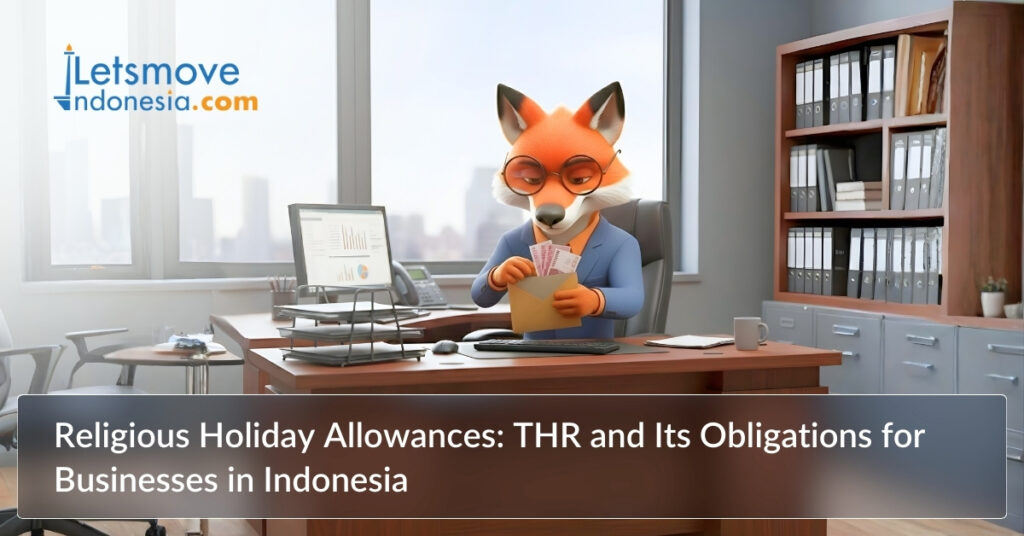
As Indonesia approaches its annual religious festive period, businesses across the archipelago face a recurring and non-negotiable obligation: the payment of Tunjangan Hari Raya (THR), or Religious Holiday Allowance.
While often perceived as a seasonal payroll exercise, THR is in fact a statutory labour right embedded in Indonesia’s employment framework. For employers, particularly foreign-invested companies and multinational operators, understanding the regulatory mechanics of Tunjangan Hari Raya is essential not only for compliance but also for workforce stability and reputational management.
In an economy where consumer demand spikes during major religious celebrations, THR also plays a macroeconomic role, stimulating household spending and reinforcing social welfare norms.
Understanding the Religious Holiday Allowance in Indonesia and Asia
Across parts of Asia, festive or bonus payments tied to religious or cultural celebrations are common practice. In countries such as Malaysia, Singapore, and the Philippines, similar structures exist either through statutory frameworks or collective agreements.
Indonesia’s Religious Holiday Allowance, however, is distinct in its mandatory legal basis. Governed primarily by Minister of Manpower Regulation No. 6 of 2016 and reinforced by subsequent circular letters, THR is not discretionary. It is an enforceable employment entitlement.
The allowance is designed to support employees in preparing for major religious holidays, including Eid al-Fitr, Christmas, Nyepi, Vesak, and other recognised observances.
For companies operating in Indonesia, THR must be treated as a core compliance matter within payroll planning.
What Is Tunjangan Hari Raya (THR)?
THR is a mandatory non-wage benefit paid by employers to employees ahead of their respective religious holiday.
The allowance is:
- Paid once per year;
- Linked to the employee’s religion;
- Based on the employee’s monthly wage;
- Applicable to both permanent and contract employees.
THR is separate from annual bonuses or discretionary incentives. It is a legal obligation.
What Is THR and Why It Matters?
THR is a mandatory annual allowance paid to employees ahead of their respective religious holiday. It is regulated under Minister of Manpower Regulation No. 6 of 2016 and reinforced annually through government circulars.
Law and Regulations Governing Taxation of THR in Indonesia
The taxation of Tunjangan Hari Raya (THR) is regulated under Indonesia’s prevailing income tax framework. The principal legal references include:
1. Law No. 36 of 2008 regarding the implementation of Income Tax (PPh Law)
Article 21 of this law governs the withholding of income tax on remuneration received by employees. This includes both regular income (such as monthly salary) and non-recurring income, including THR. As such, THR is treated as taxable employment income subject to withholding under Article 21 (PPh 21).
2. Law No. 7 of 2021 on Harmonisation of Tax Regulations (HPP Law)
The HPP Law introduced updates to Indonesia’s progressive income tax rate structure. These revised rates directly affect the calculation of tax on THR, as THR is aggregated with the employee’s annual taxable income and taxed according to the applicable progressive brackets.
3. Minister of Finance Regulation (PMK) No. 168/PMK.03/2023
This regulation provides technical guidance on the calculation and withholding of Article 21 Income Tax. It specifically clarifies the treatment of additional or irregular income, including THR, bonuses, and other non-routine payments. The regulation sets out calculation mechanisms to ensure proper withholding during payroll processing.
4. Government Regulation No. 58 of 2023
This regulation establishes the withholding tax rates under Article 21 applicable to income derived from employment, services, or activities performed by individual taxpayers. It reinforces the structured approach to withholding, including the application of the Effective Average Rate (TER) mechanism for certain payroll scenarios.
THR for a Foreign-Owned Company (PT PMA)
For PT PMA entities, this applies to:
- Indonesian employees;
- Foreign employees legally employed under a valid work permit;
- Permanent and fixed-term employees.
Failure to comply may result in administrative sanctions, labour disputes, and potential scrutiny from manpower authorities.
For foreign investors unfamiliar with Indonesia’s labour landscape, THR often becomes one of the first significant compliance checkpoints.
When Must Employers Pay THR?

Employers are legally required to pay the THR in accordance with prevailing labour regulations. Regulation requires employers to pay THR no later than seven days before the relevant religious holiday.
The payment must be made in full; instalment payments are not permitted unless explicitly agreed under exceptional circumstances and approved by the authorities.
The timing is critical. Labour inspectors actively monitor compliance during the pre-holiday period.
Who Is Eligible to Receive THR?
Employees are eligible for THR if they:
- Have worked continuously for at least one month;
- Are employed under permanent (PKWTT) or fixed-term (PKWT) contracts;
- Are actively employed at the time of payment.
Employees with at least 12 months of service are entitled to one full month’s salary.
Those employed for less than 12 months receive a prorated amount calculated based on length of service.
What Happens If Employers Cannot Pay the THR?
Failure to pay THR on time triggers administrative sanctions and penalties, such as: Fines calculated as a percentage of THR owed, written warnings, public reporting, or possible business licence implications for repeated violations.
Indonesian THR and Foreign Employees
Foreign nationals working under valid Work KITAS within a PT PMA structure are generally entitled to THR if they meet employment duration requirements.
This is an area often misunderstood by foreign investors. THR is not limited to Indonesian citizens; it applies to legally employed workers irrespective of nationality.
How Much Is THR in Indonesia? Calculating THR Eligibility for Local Employers and PT PMA Operators
In Indonesia, employees are entitled to THR once they have worked continuously for at least one month. The structure of the THR amount depends on the length of service at the time of payment.
Full Entitlement (12 Months or More of Service)
Employees who have worked for 12 months or more are entitled to one full month’s salary.
The THR amount must be paid in full no later than seven days before the relevant religious holiday.
Pro-Rated Entitlement (Less Than 12 Months of Service)
Employees with less than 12 months of continuous service are entitled to THR proportionally, calculated using the following formula:
(Months of Service ÷ 12) × 1 Month’s Salary
This ensures fairness in allocation while maintaining statutory compliance.
Salary Components Used in Calculation
The THR amount is generally calculated based on:
- Basic salary;
- Fixed allowances.
If salary components fluctuate, the THR may be calculated based on the average wage received over the relevant period, depending on the employment arrangement.
Variable bonuses, performance incentives, or commissions are typically excluded unless explicitly stated in employment contracts or company regulations.
THR Payment and Tax Implications
From a tax perspective:
- THR constitutes taxable income for employees;
- It is subject to PPh 21 withholding;
- It must be accurately reported in payroll and Coretax systems.
Improper withholding or misreporting may create secondary tax compliance risks. An integrated payroll review is therefore recommended prior to disbursement.
Learn more about the Tax Implementation of Religious Holiday Allowance in Indonesia
Work Relationship and Contractor Risk
Recent regulatory focus has examined the distinction between formal employees and partnership-based workers.
If a PT PMA engages individuals under “partnership” agreements but the working relationship demonstrates:
- Regular remuneration;
- Employer control and supervision;
- Ongoing service arrangement;
Authorities may classify the relationship as employment, triggering THR obligations. For foreign-invested digital platforms, logistics operators, or service companies, this represents a significant compliance risk. Misclassification disputes can escalate rapidly.
Additional Information: THR for Freelance Workers in Indonesia
Under Indonesian labour regulations, Tunjangan Hari Raya is primarily granted to employees working under formal employment agreements, either:
- PKWTT (permanent employment agreements); or
- PKWT (fixed-term employment agreements).
However, the increasing prevalence of freelance, project-based, and partnership arrangements has created regulatory nuance.
Are Freelancers Entitled to THR?
In principle, genuine freelancers operating independently are not automatically entitled to Tunjangan Hari Raya, as they are not classified as employees under labour law.
A freelancer typically:
- Operates independently;
- Is paid per project or deliverable;
- Is not subject to direct supervision in the same manner as an employee;
- Does not receive fixed monthly wages.
In such cases, the working relationship is considered a civil contractual relationship, not an employment relationship.
When Freelancers May Become Entitled to THR
Regulatory scrutiny focuses on substance over form. If a freelance or partnership arrangement demonstrates characteristics of employment, such as:
- Regular monthly remuneration;
- Fixed working hours;
- Direct supervision and control by the company;
- Continuous service rather than project-based engagement;
Authorities may determine that the individual functions as an employee.
In this situation, the individual may be considered entitled to the Religious Holiday Allowance, regardless of the contractual title. This assessment is particularly relevant in sectors such as:
- Digital platforms;
- Creative industries;
- Logistics and delivery services;
- Commission-based sales operations.
Manage Payroll Compliance with Lets Move Indonesia
Understanding payroll management in Indonesia requires more than processing salaries. Employers must align proper payments with statutory labour rules, ensure accurate tax calculations under PPh 21, and complete timely reporting through the Coretax system.
For PT PMA operators and growing businesses, structured payroll compliance reduces regulatory risk and protects operational stability.
To ensure salary calculation, tax withholding, and reporting obligations are handled accurately, Contact Lets Move Indonesia and speak with our consultant for integrated Payroll and Tax Management & Advisory Support.