Indonesia’s property sector continues to attract attention from investors across Asia and beyond. While rapid price growth seen in earlier years has moderated, 2026 presents a stable and strategic entry point for foreign investors looking to establish businesses or long-term property investments in the country.
With Southeast Asia’s largest economy maintaining growth around 5 percent annually, Indonesia’s property market remains closely tied to urbanization, infrastructure expansion, and government incentives designed to stimulate housing demand.
For foreign entrepreneurs and investors, this environment presents opportunities not only for property ownership but also for hospitality ventures, commercial developments, and real estate investment businesses through the establishment of a PT PMA (foreign investment company).
Current Trends in the Indonesia Property Market
The Indonesian property market is entering 2026 with moderate but stable growth. According to the Rumah123 Flash Report, housing price increases across 13 major cities remained below inflation throughout 2025.
Cities surveyed included:
- Jakarta
- Bogor
- Depok
- Tangerang
- Bekasi
- Bandung
- Surabaya
- Semarang
- Yogyakarta
- Surakarta
- Medan
- Denpasar
- Makassar
Among these markets, Denpasar recorded the fastest annual price growth at 2.5 percent, followed by Bekasi at 2.4 percent and Makassar at 2.2 percent.
Nationally, secondary home prices grew only 0.7 percent year-on-year, compared with inflation of 2.92 percent, suggesting that the property market is currently moving at a measured pace rather than experiencing speculative spikes.
At the same time, housing supply declined 1 percent month-on-month and 9.1 percent year-on-year, indicating tightening inventory levels. This combination of moderate price growth and limited supply suggests the market is becoming more stable and rational, according to property analysts.
Government Policies Supporting Property Demand
Government policy continues to play a major role in shaping Indonesia’s real estate sector. One of the most significant initiatives is the extension of the VAT incentive (PPN DTP) for residential property purchases under Minister of Finance Regulation No. 90 of 2025.
This policy allows new residential properties priced up to IDR 5 billion to receive a 100 percent VAT exemption on the first IDR 2 billion of the property value.
The incentive is part of a broader 2025–2026 economic stimulus package aimed at strengthening purchasing power and supporting the property sector.
Analysts note that the policy particularly benefits first-time homebuyers, who represented 45.5 percent of total new property demand in 2025, dominated by buyers aged 18–34 years old.
While the stimulus has boosted demand, experts also note that buyers are becoming more selective, carefully evaluating location, price, and long-term value before committing to property purchases.
Sustainability and Technology in Real Estate
The Indonesian real estate sector is also experiencing shifts toward sustainability and technology adoption.
Developers are increasingly integrating:
- eco-friendly construction methods
- energy-efficient designs
- smart home technologies
- digital property platforms
These trends reflect changing buyer preferences and growing environmental awareness among urban consumers.
For investors, sustainable developments are becoming an important differentiator in competitive property markets such as Jakarta, Bali, and Surabaya.
Key Drivers of Property Value in 2026
Population Growth and Expanding Middle Class
Indonesia’s expanding middle class continues to drive demand for housing across multiple segments, ranging from affordable homes to upscale residential developments.
This demographic shift supports long-term property demand, particularly in urban centers where employment opportunities and infrastructure development attract internal migration.
Infrastructure Development
Major infrastructure projects across Indonesia are also contributing to property market growth. New toll roads, transport networks, and urban development initiatives improve accessibility and increase property values in surrounding areas.
Regions benefiting from infrastructure improvements often experience stronger real estate demand, particularly in satellite cities around Jakarta and tourism hubs such as Bali.
Investment Opportunities in Major Cities
Jakarta: Indonesia’s Business and Property Hub
Jakarta remains the economic and commercial center of Indonesia, offering strong demand for office spaces, mixed-use developments, and residential properties.
Corporate expansion and urban redevelopment projects continue to support demand for commercial real estate in the capital.
Bali: A Growing Investment Destination
Beyond Jakarta, Bali continues to attract international investors, particularly in the hospitality and tourism sectors.
Foreign investors are increasingly exploring opportunities in:
- villa rental businesses
- boutique hotels
- co-living developments
- tourism-related commercial properties
The island’s global reputation as a travel destination, combined with strong tourism recovery, continues to support property demand.
Invest Property Through PT PMA: Guide for Foreign Investors
For foreign nationals looking to invest in property in Indonesia, particularly for commercial or rental purposes, establishing a PT PMA (Perseroan Terbatas Penanaman Modal Asing) is often the most secure and compliant approach.
A PT PMA is a foreign investment company legally registered in Indonesia, allowing foreign shareholders to conduct business activities and hold certain property rights.
Through a PT PMA, foreign investors may:
- Develop villas, hotels, or commercial real estate
- Hold land under Hak Guna Bangunan (Right to Build)
- Operate hospitality businesses
- Manage property rental operations legally
Obtain HGB Under Your PT PMA
The Right to Build (HGB) title typically allows land use for up to 30 years, with extension options available under Indonesian land regulations.
This structure offers several advantages for investors:
- Legal compliance: Property ownership is held through a registered Indonesian company rather than informal arrangements.
- Business operations: Investors can legally run hospitality or property-related businesses.
- Investment protection: Corporate ownership provides clearer legal protection under Indonesian law.
Because the PT PMA structure must comply with Indonesia’s KBLI business classification system, foreign investors should always consult experienced professionals before establishing a property investment company.
Tips Before Investing in the Indonesia Property Market
Conduct Thorough Market Research
Understanding market trends, property values, and regional growth patterns is essential before making investment decisions.
Use Data and Technology
Modern property platforms and data analytics tools can help investors evaluate potential opportunities and risks.
Build Relationships with Local Experts
Working with local professionals, such as real estate agents, consultants, and legal advisors, can provide valuable insights and access to exclusive opportunities.
Build Your Property Investment in Indonesia with LMI Consultancy
Entering Indonesia’s property market requires more than identifying attractive real estate opportunities. Investors must also navigate corporate regulations, licensing requirements, and property ownership structures.
As a subsidiary of LMI Consultancy, Lets Move Indonesia provides comprehensive support for foreign investors planning to establish property investments or real estate businesses in Indonesia.
Their services include:
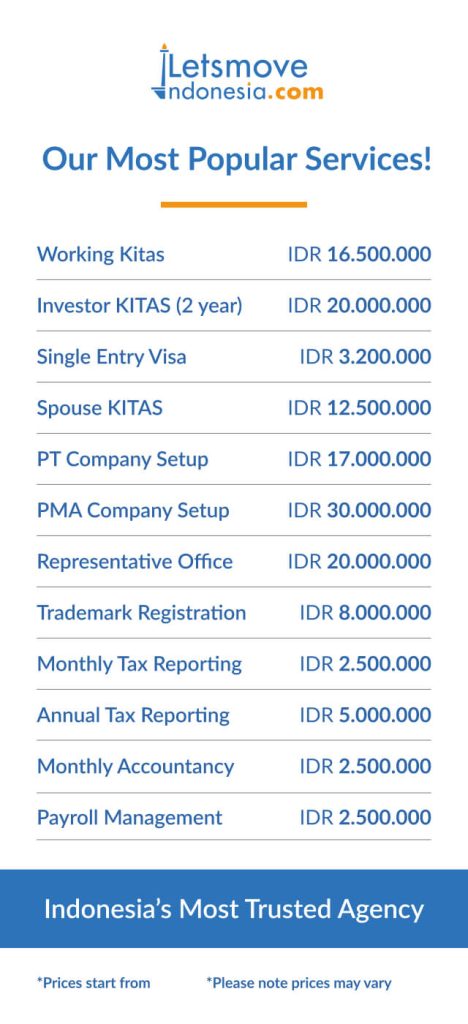
- PT PMA company establishment
- Business licensing through the OSS system
- Legal compliance and advisory services
- Investor KITAS and relocation support
With extensive experience assisting international entrepreneurs, we help clients structure their investments safely and in full compliance with Indonesian regulations.
Whether you are planning to launch a villa rental business in Bali, develop a hospitality project, or establish a property investment company in Indonesia, working with experienced consultants can ensure your investment starts on the right foundation.
Contact Lets Move Indonesia today to explore how you can legally establish your property investment business in Indonesia.