Remote Visa (KITAS) – Who is it for and what are the benefits
As of 2024, Indonesia has introduced several more visa programmes to cater to convenient travel to Indonesia without the hassle of constant exits and re-entries or frequent immigration visits. One of them was the KITAS E33G or Remote Visa, the new entry permit aimed to aid digital nomads to embark on a journey to Indonesia.
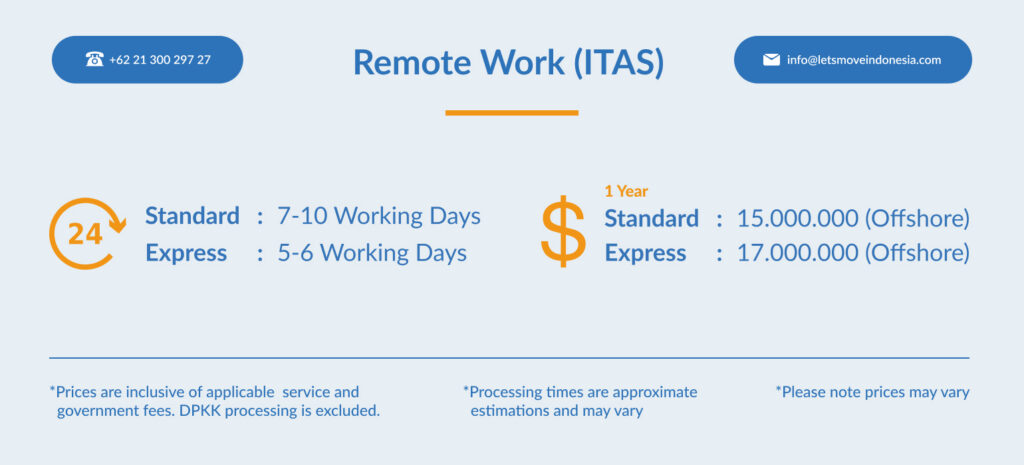
KITAS E33G, also known as the Remote Worker VISA, a 1-year temporary residence permit that provides an opportunity to reside in Indonesia while working virtually for a company located outside the country. Designed to cater to experienced slow-living digital nomads in search of their next destination or individuals seeking to extend their stay in Bali without interrupting their employment, this visa offers an ideal solution.
Benefits of Remote Visa to Indonesia 2025
Recognising the changing nature of work and the potential benefits of attracting remote workers, Indonesia has taken a progressive step forward by launching its remote worker visa program. The Remote Worker Visa (E33G) offers a streamlined application process for those looking to make Indonesia their temporary home base. This initiative aims to make it easier for digital nomads and remote employees to live and work in Indonesia.
Simplified Application Process: The Remote Worker Visa (E33G) provides a simplified application process, making it easier for remote workers to obtain a visa to live and work in Indonesia.
Extended Visa Duration: The visa is valid for up to 12 months, allowing remote workers to stay and work in Indonesia for an extended period without the need for frequent visa renewals.
Remote Work Flexibility: Remote workers can work from anywhere in Indonesia, providing flexibility and freedom to choose their preferred work location.
Tax Benefits: Remote workers may be eligible for tax benefits and incentives provided by the Indonesian government to attract foreign professionals.
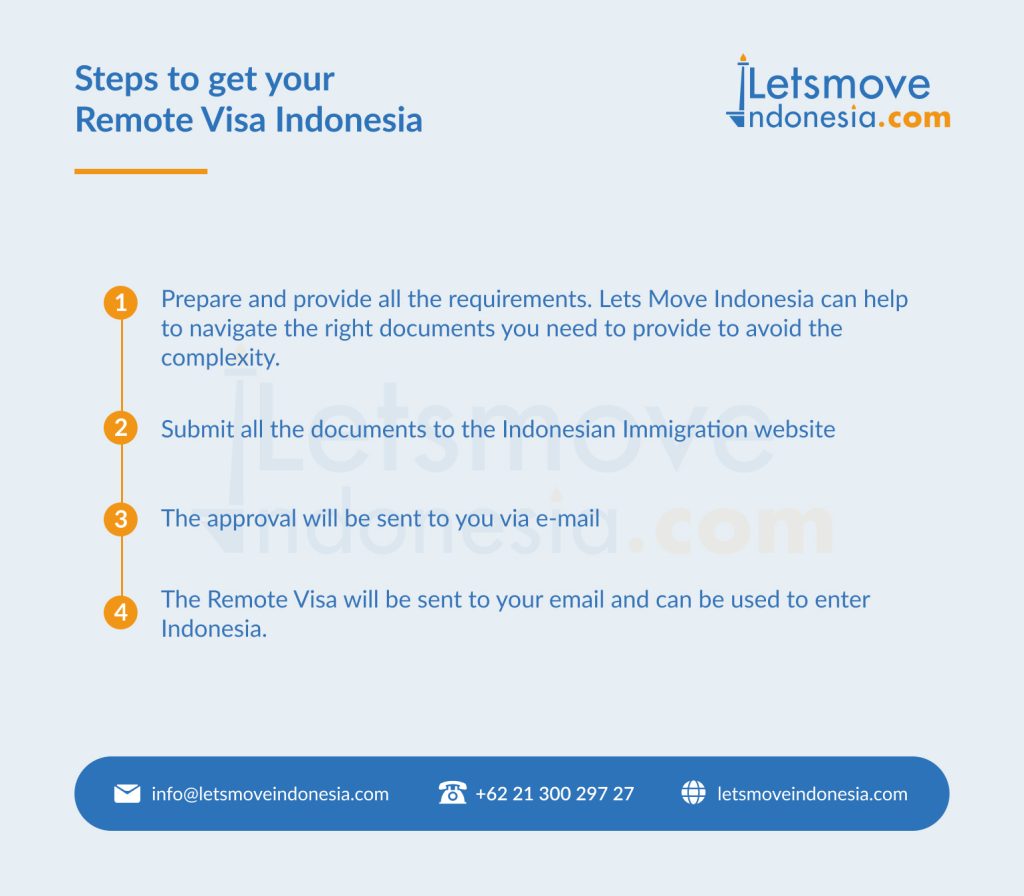
Steps to get your Remote Visa Indonesia
Prepare and provide all the requirements. Lets Move Indonesia can help to navigate the right documents you need to provide to avoid the complexity.
Submit all the documents to the Indonesian Immigration website
The approval will be sent to you via e-mail
The Remote Visa will be sent to your email and can be used to enter Indonesia.
Common Questions About Indonesia’s Remote Work Visa Indonesia
Can the remote worker visa allow digital nomads to work in Indonesia?
Yes, digital nomads can work in Indonesia, but with limitations. E33G visa holders are only authorized to work for companies registered outside of Indonesia and cannot receive income from any Indonesian entity or individual.
Can I extend my remote worker KITAS after one year?
The Remote Worker KITAS E33G is valid for a single year and cannot be renewed. To continue your stay in Indonesia, you must close your current KITAS before its expiration, leave the country, and apply for a new one.
Requirements to Obtain the Remote Worker Visa (KITAS) Indonesia
Document Requirements
Application letter (Surat Permohonan dan Jaminan)
Passport valid for at least 12 (twelve) months (for holders of travel documents other than passports such as emergency passports, documents of identity, etc. must be valid for 12 months).
Latest Color photograph with red or white background size 4X6
Personal bank statement with minimum amount USD $2000 or equivalent the last 3 months period (including name, date of period, and balance account).
Curriculum Vitae.
Travel Itinerary.
Bank account that proves income in the form of salary or income worth at least US$60,000 per year;
Employment contract with a company established outside the Indonesian Territory
Address in Indonesia
Username and Password Immigration system (Molina),
Other documents if required.
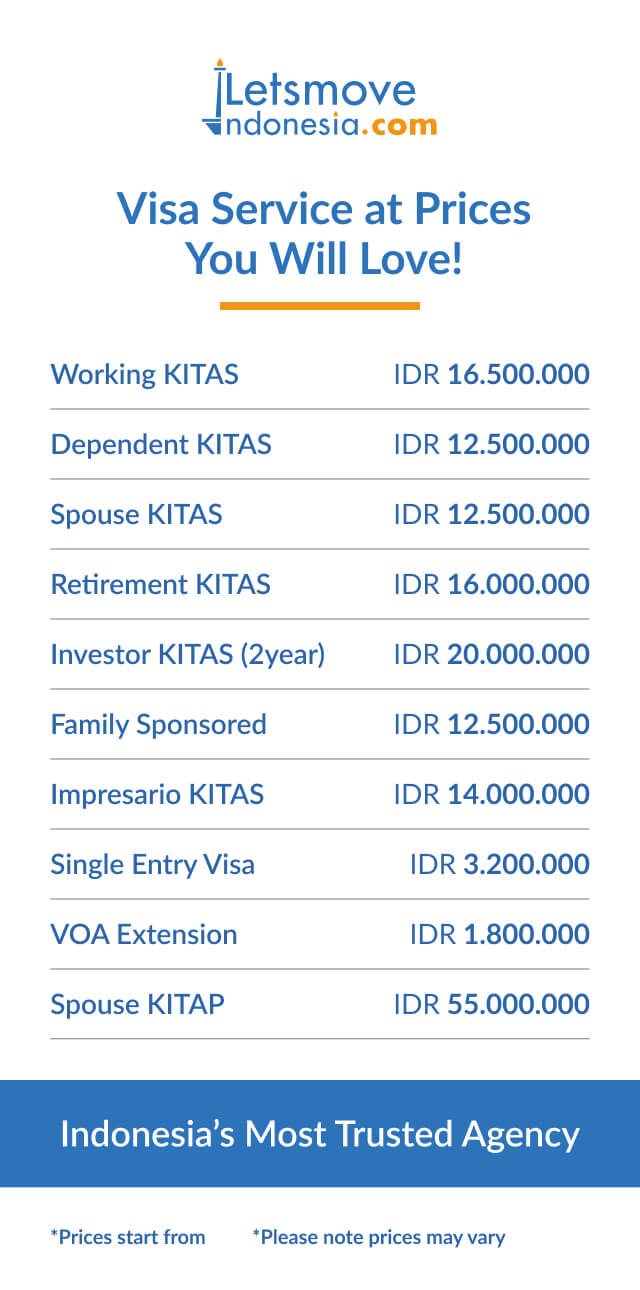
Want to know more about similar Visa options? Check out some of the other Indonesia Visas below:
Recognised as the Most Ethical Visa & Business Consultancy, Lets Move Indonesia has been the leading business consulting firm in Indonesia since 2016. We aim to be a complete resource for expatriates, giving reliable and professional assistance.
As one of the countries with majority of muslim residents in the world, Indonesia has a relatively strict regulations regarding halal certification, making businesses selling products that do not meet halal criteria (haram) now face a separate compliance requirement: they must make that status clear to consumers. Under Peraturan BPJPH Nomor 3 Tahun 2026 on […]
For companies employing foreign nationals in Indonesia, immigration compliance does not end when a visa or work permit is issued. As businesses expand, foreign employees may move between offices, factories, project sites and client locations, creating additional compliance considerations that can easily be overlooked. An immigration inspection in Indonesia is one of the ways authorities […]
For foreign investors, Indonesia offers several pathways to establish a business, invest capital and build a long-term presence in the country. But one distinction remains critical: being an investor does not automatically mean you can perform every type of work in Indonesia. The question is no longer simply which visa allows you to stay. It […]
Indonesia has introduced a new framework for trademark registration, bringing changes to how businesses apply for, publish and obtain trademark protection. Minister of Law Regulation No. 5 of 2026 on Trademark Registration (“MOL Regulation No. 5/2026”) was issued on 13 January 2026 and took effect on 23 February 2026. The regulation replaces Minister of Law […]
Setting up a company in Indonesia involves more than registering a business entity. Foreign investors must consider the appropriate corporate structure, foreign ownership rules, investment requirements, licensing, employment regulations and ongoing compliance. For investors considering an Indonesian business presence, the PT PMA company, Penanaman Modal Asing, or foreign-owned limited liability company, is generally the principal […]
Indonesia’s visa framework in 2026 gives international travellers several ways to enter the country, ranging from visa-free visits and Visa on Arrival (VoA) to single-entry, multiple-entry and longer-term residence visas. For travellers heading to Bali, Jakarta or elsewhere in the archipelago, understanding the rules before departure is essential. A visa may facilitate entry, but final […]