Working in Indonesia without the appropriate visa isn’t just a minor infraction; it’s a serious legal violation that can have severe repercussions for both the individual and the employing company. Indonesian law mandates that foreign nationals possess a valid visa or stay permit to engage in any work-related activities.
Working without one is considered illegal and can lead to hefty fines, deportation, or even blacklisting, barring future entry into the country. Therefore, we made this article to give you a full understanding of the type of Indonesian visa that is correct for your investment and employment.
What is KITAS in Indonesia?
KITAS is a temporary stay permit granted by the Indonesian government, enabling foreign nationals to enter Indonesia and reside in the country for a specified duration, typically ranging from six months to two years. It’s essential for those planning to work, invest, or engage in other activities requiring a long-term stay in Indonesia.
KITAS vs KITAP
The key difference between a KITAS (Kartu Izin Tinggal Terbatas or Limited Stay Permit Card) and a KITAP (Kartu Izin Tinggal Tetap or Permanent Stay Permit Card) lies in their duration and the rights they confer.
KITAS (Limited Stay Permit) is a temporary long-term stay permit that allows foreign nationals to live in Indonesia for a specific period, usually ranging from six months to two years. It’s suitable for various purposes such as work, investment, or family reunification. A KITAS allows you to enter and exit Indonesia multiple times during its validity. However, it needs to be renewed periodically to maintain your legal stay.
Meanwhile, KITAP (Permanent Stay Permit) is a permanent stay permit, granting foreign nationals the right to live in Indonesia indefinitely. It offers greater flexibility and benefits compared to a KITAS, including easier access to financial services and property ownership.
What are the Types of KITAS Permits in Indonesia?
Several KITAS categories cater to diverse purposes, each with specific eligibility criteria and benefits. Here are some of the most common types:
Work KITAS
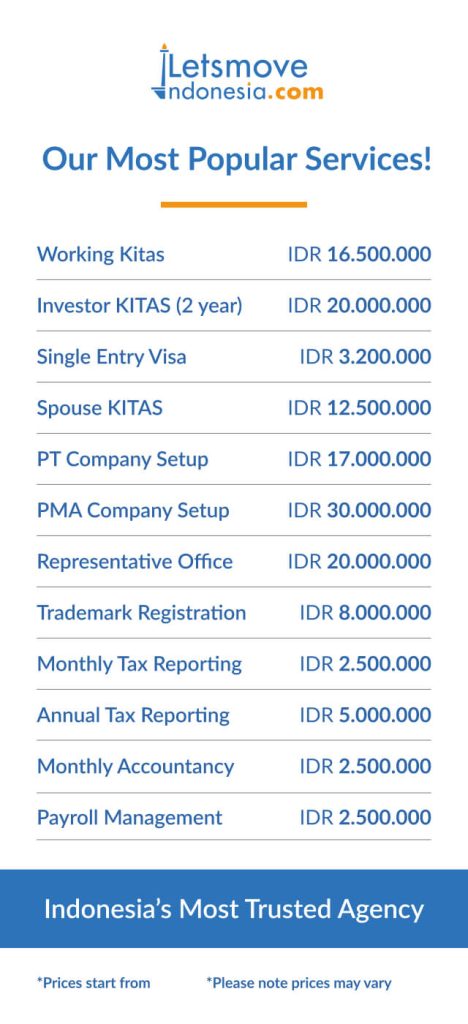
Designed for foreign nationals employed by Indonesian companies or organisations. This KITAS allows individuals to live and work in Indonesia legally. The duration of a Work KITAS is typically tied to the duration of the employment contract, offering flexibility for both short-term and long-term assignments.
Investor KITAS
Tailored for foreign investors who have made significant investments in the country. It provides the opportunity to reside in Indonesia and actively manage their investments, fostering a conducive environment for business growth and expansion. This KITAS category typically requires a certain level of investment in an Indonesian company, showcasing the government’s commitment to attracting foreign capital and expertise.
Family KITAS (Dependent and Spouse KITAS)
This type of KITAS is issued to the immediate family members (spouse and children) of Indonesian citizens or foreign nationals holding other types of KITAS or KITAP (permanent stay permit). It facilitates family reunification and allows families to reside together in Indonesia. The validity of the Family KITAS is typically linked to the sponsoring family member’s permit.
Retirement KITAS
This category caters to foreign nationals who wish to spend their retirement years in Indonesia. Applicants must be at least 55 years old and demonstrate sufficient financial resources to support themselves during their stay. The Retirement KITAS offers a serene and fulfilling retirement experience in the beautiful Indonesian archipelago.
Beyond these primary categories, Indonesia also provides KITAS for various other purposes, including:
- Student KITAS: For international students enrolled in Indonesian educational institutions.
- Cultural/Religious KITAS: For individuals engaged in cultural or religious activities.
- Other Specific Purposes: KITAS may also be granted for specific reasons such as research, journalism, or volunteer work.
Work KITAS vs Investor KITAS
While both allow for extended stays and work permits, they cater to different needs. Understanding the distinctions is key to choosing the right option for your circumstances.
Eligibility to Apply for Work Visa
To qualify for a Work KITAS, you must secure employment with an Indonesian company or organisation willing to sponsor your visa. The company must also demonstrate a need for your specific skills and expertise, which cannot be readily fulfilled by local talent. Additionally, you’ll need to meet specific educational and experience requirements.
Eligibility to Get an Investor Visa
The Investor KITAS is designed for foreign investors who have invested a specified amount in an Indonesian company. The investment threshold varies depending on the type of investment and the sector. This visa allows you to reside in Indonesia and actively manage your investment.
Visa validity
Both Work KITAS and Investor KITAS are initially granted for one or two years, with the possibility of extensions. The specific validity period depends on your circumstances and the type of KITAS.
Are investor KITAS holders allowed to work in Indonesia?
To work in Indonesia, KITAS holders still have to obtain a work permit, regardless of what type of permit they have. So, foreign investors can work in Indonesia as long as they meet certain requirements and have an active work permit.
Obtaining IMTA: The Working License for Foreigners in Indonesia
In addition to the KITAS, foreign nationals working in Indonesia typically need a Work Permit, also known as an IMTA (Izin Mempekerjakan Tenaga Kerja Asing). This permit is sponsored by your employer and requires fulfilling certain criteria related to skills, qualifications, and the position you’ll be filling.
To obtain a work permit, your sponsor company should register your employment from the Ministry of Manpower of the Republic of Indonesia.
How to Process a KITAS Application?
The KITAS application process involves several steps, including:
- Securing Sponsorship: Obtain sponsorship from an Indonesian employer or demonstrate your investment for the Investor KITAS.
- Preparing Documents: Compile all required documents, including a valid passport, photos, proof of education and experience, and supporting letters.
- Apply Online: As of 2024, all KITAS applications must be submitted online through the official website of the Indonesian Directorate General of Immigration.
- Obtaining Other Permits: Depending on your KITAS type, you might need additional permits like the IMTA (Work Permit).
While the online system has made KITAS applications more convenient, navigating the intricacies of the process and ensuring your KITAS is approved can still be challenging. This is where partnering with a trusted visa agency can make a significant difference.
Case Study: What Requirements Will They Need If a USA Investor Opens a Company in Bali?
If a foreigner wants to open a company in Bali and work there, they’ll need several permits:
- Investor KITAS or KITAP: For foreign shareholders, depending on the investment amount and duration of stay desired.
- Work KITAS: For foreign employees hired by the company.
- Company Registration and Business License: To legally establish and operate the company in Bali.
- Work Permit (IMTA): For any foreign employees working for the company.
How to Apply for KITAS?
Required documents:
The specific documents required vary depending on the type of KITAS. Generally, you’ll need:
- Valid passport with at least 6 months validity remaining
- Passport-sized photographs
- Completed application form
- Sponsorship letter from your employer or proof of investment
- Educational and professional qualifications
- Other supporting documents as required
KITAS application process
Foreign workers whose purpose is to work as an expert in Indonesia submit the application by filling out the data application and attaching the requirements through the official website of Indonesian Immigration.
Can We Apply for KITAS Online?
Yes, as of 2024, the Indonesian government has channelled all Indonesia Visas and KITAS application processes through the online system (e-visa.imigrasi.go.id). However, you might still need to visit the Indonesian embassy or consulate in your home country for certain steps, like submitting your biometric data.
KITAS Extension
Your KITAS can be extended upon expiry, provided you still meet the eligibility criteria and fulfil the renewal requirements. It’s crucial to start the extension process well in advance to avoid any complications.
How much is KITAS extension?
The cost of a KITAS extension varies depending on the type of KITAS and the duration of the extension. Generally, it involves fees for application, issuance, and other administrative costs.
Understand everything you need to know about types of KITAS in Indonesia with Lets Move Indonesia
Dealing with the intricacies of Indonesian visa and immigration rules can be quite daunting. Lets Move Indonesia has a number of experienced consultants with in-depth knowledge of KITAS and other stay permit options.
We can assist you in assessing your eligibility for different KITAS types, preparing and submitting your application accurately, handling communication with relevant authorities, and guiding you through the entire process, from start to finish.
Disclaimer: This article provides general information on company formation in Indonesia. For specific legal advice tailored to your situation, please consult with qualified professionals.
Related Articles About Company Incorporation Indonesia
What is a Business License? Answering Your Questions About Licenses and Permits in Indonesia
Company Dissolution in Indonesia 2024: A Guide for Foreign Investors
Work Permit (2024): A Comprehensive Guide for Foreign Professionals
How to Register a Company in Indonesia: Your Complete Guide to Business Setup
Business Etiquette Indonesia: Understand Essential Things About Business Culture in Indonesia